
Previous
Next
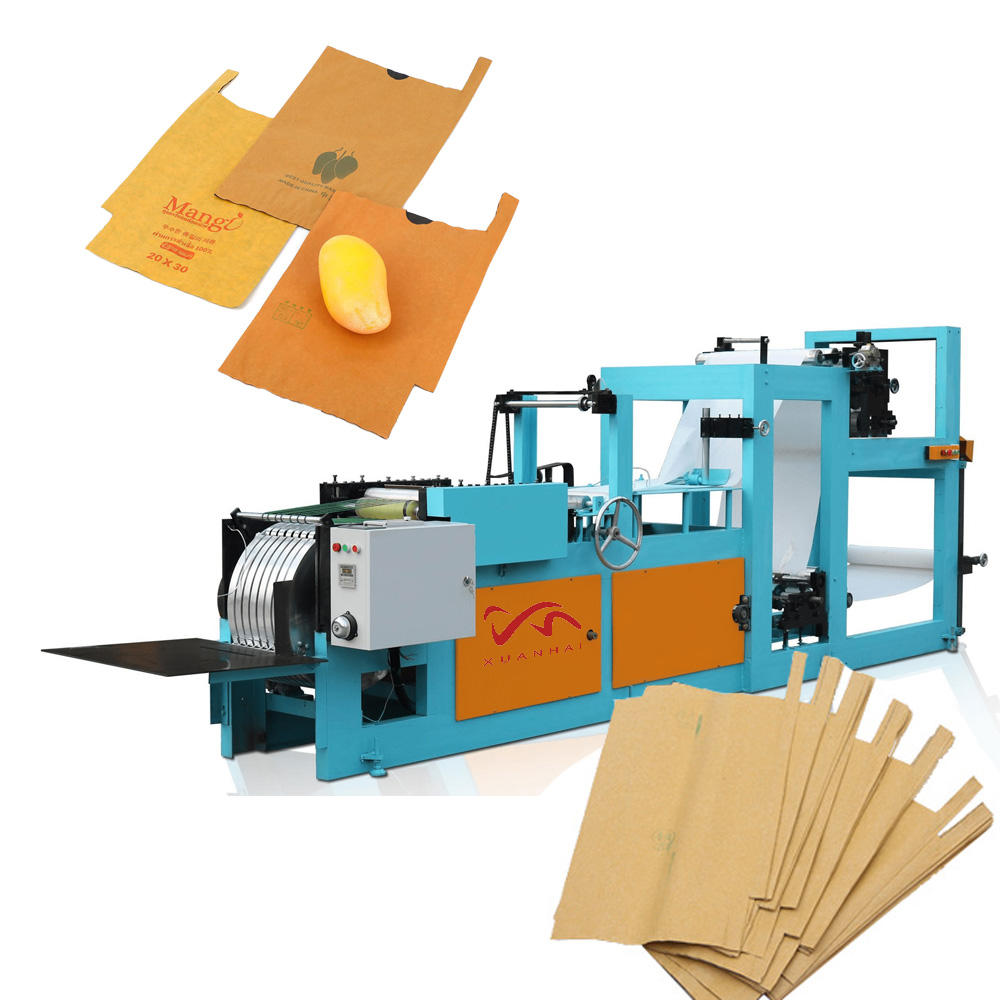
Mango Fruit Protection Paper Bag Machine | Production Line Setup Guide
Description
🥭 Agricultural Packaging Solutions
Mango Fruit Protection Paper Bag Production Line
Complete Project Guide for India & Thailand — Machine selection, ROI analysis, raw material sourcing, and joint-venture structure for a 100,000 bags/day facility.
288K+
Bags/day per machine
35+
Years of experience
15+
Countries served
8.2%
Market CAGR 2025–2030
The global demand for premium, residue-free mangoes has never been stronger. Retailers in the EU, Japan, South Korea, and the Middle East are tightening food-safety requirements — and pre-harvest fruit bagging has become the most cost-effective technology to meet those standards while simultaneously boosting yield, color uniformity, and shelf life.
This guide provides a complete, operator-level blueprint for establishing a mango fruit protection paper bag manufacturing facility with a daily output target of 100,000 bags. Whether you are a machinery investor, agricultural entrepreneur, or orchard cooperative looking to integrate backward into supply, this document gives you everything you need: machine comparisons, raw material sourcing, ROI projections, logistics, and a proven joint-venture framework.
Why now? The global mango protection bag machine market is forecast to grow at 8.2% CAGR through 2030, driven by rising organic certification requirements and expanding mango export volumes from India, Thailand, Vietnam, and the Philippines.
1 · Why Mango Bagging Technology Matters
Mango bagging — enclosing individual fruits in purpose-made paper or composite bags while still on the tree — delivers measurable, field-verified benefits that no spray program can fully replicate.
Pest & Disease Control
Creates a physical barrier against fruit flies (Bactrocera dorsalis), thrips, bacterial black spot, and over 188 insect species that affect mango crops in India.
Sunburn & Weather Protection
Shields fruit from UV damage, windborne abrasion, hailstones, and excessive rainfall during critical late-season growth stages.
Uniform Color & Appearance
Produces even skin coloration and a smoother surface finish — the appearance premium markets pay top dollar for.
Pesticide Cost Reduction
Farmers in Vietnam's Sơn La province report significantly fewer spray applications, reducing chemical costs and residue risk for export compliance.
Extended Shelf Life
Bagged mangoes have thicker, damage-free skin, resulting in slower ripening onset and longer post-harvest handling windows.
Higher Farm-Gate Price
Indian research shows bagged mango orchards achieving up to 9 t/ha vs 7.5 t/ha for unbagged, with net returns of approximately Rs. 3,42,300/ha.
2 · Market Opportunity: India, Thailand & Southeast Asia
The following countries represent the most active markets for mango fruit protection paper bags and the machines that produce them. Each has distinct agronomic conditions, regulatory drivers, and buyer profiles.
🇮🇳
India
World's largest mango producer. Faces 188+ insect pest species. Alphonso, Kesar, and Langra varieties command export premiums. Government-backed schemes promote integrated pest management including bagging.
🇹🇭
Thailand
Nam Dok Mai and R2E2 varieties targeted at Japan, China, and EU. Refined bagging practices refined over 20+ years. Strong cooperative infrastructure for technology adoption.
🇻🇳
Vietnam
Government-launched coordinated bagging campaigns to meet VietGAP and GlobalGAP standards. Sơn La province alone bags 400+ hectares annually, 30%+ of total area.
🇵🇭
Philippines
Carabao variety (rated "world's best" at 1995 World Food Expo) is a premium export. Typhoon-prone coastal regions favor knife-handle bags for wind resistance.
🇲🇽
Mexico
Ataulfo and Tommy Atkins exported to North America and Europe. Growing organic certification movement increasing demand for non-chemical protection.
🇮🇩
Indonesia
Gedong Gincu and Arumanis varieties gaining export traction. Large smallholder base beginning to consolidate, creating demand for bag suppliers.
3 · Knife-Handle vs Flat-Mouth: Which Bag Design Is Right for Your Market?
Your machine choice is directly linked to the bag type your market demands. Understanding the structural and economic differences is essential before selecting equipment.
✋ Knife-Handle Bag (Wire-in-handle)
Wire embedded in protruding bag-mouth tab
30–50% faster worker bagging speed
15–20% larger usable interior volume
Tear rate below 2% under field conditions
Superior wind resistance — ideal for coastal/typhoon zones
Reusable (can be carefully collected and reused)
Preferred by commercial farms and export-grade operations
Best for: Mango, guava, papaya, grapefruit, apple/pear (export)
○ Flat-Mouth Bag (Wire-below-mouth)
Simpler straight-top opening design
Wire sits 1–2 cm below the bag opening
5–8% lower material cost per unit
Slightly slower to apply (wire placement must be accurate)
Smaller effective interior space once sealed
Higher suitability for mechanized application arms
Preferred by small organic farms, EU-certified operations
Best for: Lychee, citrus, peach, kiwi, cherries
Supplier Insight: For India and Thailand's commercial mango sector, knife-handle bags in sizes 180×270 mm to 210×300 mm represent 70–80% of market demand. If you are targeting export-grade mango farms, specify knife-handle capability when requesting machine quotations.
4 · Machine Models & Technical Specifications
Ruian Xuanhai Machine Co., Ltd. offers three core models of fully automatic, PLC-controlled mango fruit protection bag making machines. All models share these standard features:
1–2 layer kraft paper compatibility
Automatic wire insertion system (for knife-handle bags)
Glue automatic temperature control device (stable adhesion in all seasons)
Electronic + mechanical dual-counter with auto-stack output
Variable-frequency drive for noise reduction
Manipulator bag-pickup system for hands-free operation
Full-bearing transmission for extended machine life
Model A
200–800 pcs/min
Bag width100–200 mm
Bag length140–220 mm
Power1.5 KW
Voltage220V / 380V
Machine weight800 kg
Dimensions (L×W×H)4800×1200×1100 mm
USD $23,000–$28,000 FOB
Best for high-speed production of compact fruit bags (cherry, citrus, small lychee). Highest throughput ceiling of the three models.
⭐ Most Popular for Mango
Model B
300–600 pcs/min
Bag width150–200 mm
Bag length180–300 mm
Power2.2 KW
Voltage380V
Machine weight1,000 kg
Dimensions (L×W×H)4000–5500×900×1750 mm
USD $28,000–$35,000 FOB
Handles the most common mango bag dimensions (180–300 mm length). Ideal balance of speed, flexibility, and footprint. Recommended for 100K/day targets.
Model C
200–600 pcs/min
Bag width150–320 mm
Bag length250–400 mm
Power2.2 KW
Voltage380V
Machine weight1,500 kg
Dimensions (L×W×H)5400–6800×1400×1750 mm
USD $35,000–$42,000+ FOB
Widest format range — accommodates large mango varieties (Kate, Golden) plus guava, pomelo, and papaya. Future-proofs production for product diversification.
Side-by-Side Specification Table
| Parameter | Model A | Model B Recommended | Model C |
|---|---|---|---|
| Bag width range (mm) | 100–200 | 150–200 | 150–320 |
| Bag length range (mm) | 140–220 | 180–300 | 250–400 |
| Max speed (pcs/min) | 800 | 600 | 600 |
| Min speed (pcs/min) | 200 | 300 | 200 |
| 24h output @ min speed | ~288,000 | ~432,000 | ~288,000 |
| Layers supported | 1–2 | 1–2 | 1–2 |
| Motor power (KW) | 1.5 | 2.2 | 2.2 |
| Voltage options | 220V or 380V | 380V | 380V |
| Machine weight (kg) | 800 | 1,000 | 1,500 |
| Floor footprint (L×W, mm) | 4800×1200 | 4000–5500×900 | 5400–6800×1400 |
| Est. price range (USD FOB) | $23K–$28K | $28K–$35K | $35K–$42K+ |
| Best use case | Small fruit, max speed | Standard mango bags | Large fruit, diversification |
Capacity check: Even at the lowest rated speed (200 pcs/min, 24 hours), a single machine produces 288,000 bags/day — nearly 3× the 100,000/day project target. This means you operate with significant buffer capacity for maintenance windows, shift changes, and seasonal demand spikes.
5 · Raw Material Requirements
Selecting the right paper specifications is as important as the machine itself. The wrong paper grade leads to in-field bag failures that negate the entire bagging investment.
| Material | Specification | Purpose | Source Options |
|---|---|---|---|
| Outer kraft paper | 29–35 gsm; food-grade, wood-pulp based | Primary structural layer; weather and UV shield | Local mills (India/Thailand) or Chinese suppliers |
| Inner black wax paper (double-layer bags) | 25–30 gsm; wax or paraffin coated, light-blocking | Creates dark micro-climate to improve color development and exclude light-loving pests | Specialty paper converters in China, Japan |
| Binding wire | 0.28–0.35 mm diameter; galvanized or coated | Embedded handle wire for knife-handle bags | Local wire suppliers; typically sourced domestically |
| Food-safe adhesive | Hot-melt or water-based EVA glue | Bag seam bonding; must remain effective in high-humidity tropical conditions | Chemical suppliers in China or local markets |
| Waterproof coating (optional) | Paraffin wax emulsion or cationic rosin size | Applied in-line for enhanced moisture resistance; critical in high-rainfall zones | Specialty chemical suppliers |
Paper Grammage Guide by Climate Zone
Low-Light / Shaded Orchards
Recommended outer paper: 29–32 gsm. Lighter weight reduces material cost without compromising protection in low-UV conditions.
High-Sunlight / Coastal Exposure
Recommended outer paper: 33–35 gsm. Heavier weight provides stronger UV and wind abrasion resistance for exposed sites.
High-Rainfall Tropical Zones
Add in-line paraffin wax coating. Reduces water absorption by up to 85%, preventing bag disintegration during monsoon-season fruit development.
Export-Grade Production
Use double-layer construction with light-blocking inner layer. Produces uniform skin color and sharply reduces pesticide residue risk for EU/Japan markets.
6 · How the Mango Bag Production Line Works
Understanding the production process helps you plan factory layout, staffing, and quality control checkpoints. A fully automatic line completes all steps with minimal human intervention.
- Paper Roll LoadingKraft paper rolls (single or dual-layer) are loaded onto the unwinding unit. The machine automatically tracks and tensions the paper feed to prevent skewing or wrinkling.
- Waterproof Coating Application (Optional In-line)For high-rainfall markets, a wax coating station applies paraffin emulsion to the paper surface before folding. Temperature is automatically controlled for consistent penetration depth.
- Folding & FormingThe paper is folded into the bag shape using precision-machined forming guides. For double-layer bags, the inner wax-coated sheet is laminated to the outer kraft layer at this stage.
- Glue Application & Seam BondingFood-safe adhesive is applied to the seam area via the temperature-controlled gluing system. The glue automatic temperature control device ensures consistent bond strength regardless of ambient temperature (critical in winter/spring production).
- Wire Insertion (Knife-Handle Bags)Thin galvanized wire is automatically fed and embedded into the protruding bag-mouth handle. Wire length and tension are servo-controlled for consistent handle formation across all bags.
- Bag Cutting & Ventilation Hole PunchingThe continuous tube is cut to the specified bag length. Optional hole-punch stations create ventilation openings at the bag base for air circulation and moisture drainage.
- Counting, Stacking & OutputElectronic + mechanical dual counters tally each bag. When the preset batch count is reached, the manipulator stacks the bags neatly and discharges them to the collection station — no manual counting required.
Operator requirement: A fully automatic production line of this type requires 2–3 operators per shift — one for roll-loading and material monitoring, one for quality inspection and output handling, and one for general machine oversight. No high-skill machining knowledge is required after initial training.
7 · Investment & ROI Analysis
The following projections are based on a single Model B machine targeting 100,000 bags/day at a selling price representative of the India/Thailand market. Actual figures will vary by location, local material costs, and distribution channel.
Machine Investment (Model B, FOB)
~$28K–$35K
Add ~$3K–$5K for shipping, installation, and initial training
Daily Production Target
100,000 bags
Machine capacity is 288,000/day — significant operational headroom
Raw Material Cost per 1,000 Bags
~$4–$7 USD
Varies by paper gsm, coating, and local material sourcing
Selling Price per 1,000 Bags (India/Thailand)
~$12–$22 USD
Premium double-layer export-grade bags command higher prices
Gross Margin per 1,000 Bags (Estimated)
~$5–$15 USD
Before labor, facility, and overhead costs
Estimated Payback Period
12–24 Months
Faster in markets with established mango cooperative buyers
💡 Revenue Diversification: A single machine can produce bags for mango, guava, pomegranate, citrus, peach, and kiwi by adjusting size settings. This multi-fruit capability smooths revenue seasonality — mango bagging peaks from February to May; citrus and guava fill other months.
Why Joint-Venture Structures Outperform Export-Only Models
Establishing local production instead of exporting finished bags from China dramatically improves unit economics:
Eliminate import duties: India imposes 15–25% duties on finished agricultural packaging imports; local production sidesteps this entirely.
Reduce freight costs: Kraft paper rolls are far more economical to ship than finished bags (better compressibility, lower volume).
Faster response to seasonal demand: Local manufacturing can scale up production weeks before bagging season; import logistics cannot.
Brand and relationship advantages: "Locally made" resonates strongly with government procurement programs and farmer cooperative tenders.
8 · Joint-Venture Project Structure
| Party | Contribution |
|---|---|
| Technology Partner (Machine Supplier) | Machinery supply, technical specifications, installation, operator training, ongoing technical support, and spare parts supply chain |
| Local Operating Partner | Land and facility, local labor force, regulatory registration, domestic market distribution, raw material procurement relationships, and customer network |
This structure allows the technology partner to expand market reach without managing local regulatory complexity, while the local partner gains access to industrial-grade equipment and manufacturing know-how that would otherwise require years to develop independently.
Project Milestones
- Due Diligence & Market Study (Weeks 1–4)Define target mango-growing districts, map existing bag suppliers, and confirm forward purchasing intent from 2–3 mango cooperatives or exporters.
- Machine Selection & Order Placement (Weeks 5–8)Finalize model, bag dimensions, and optional accessories. Sign purchase agreement and initiate production at Xuanhai factory.
- Facility Preparation (Weeks 6–16)Secure production space (min. 300 m², 380V three-phase power), establish raw material storage area, and arrange port-to-facility logistics.
- Shipping & Customs (Weeks 12–18)Machine ships FOB from Ningbo or Shanghai. Estimated sea freight time: 18–25 days to India/Thailand. Coordinate import clearance in parallel.
- Installation & Commissioning (Weeks 18–22)Xuanhai installation team arrives for setup, calibration, test runs, and 3–5 days of operator training.
- Trial Production & QC (Weeks 22–26)Run at reduced speed for first 2 weeks while operators build proficiency and quality control systems are established.
- Full Commercial Production (Week 26+)Ramp to full speed. Begin securing annual supply agreements with orchard cooperatives ahead of the next mango bagging season.
9 · Shipping Ports & Logistics
Equipment ships from major Chinese ports (Shanghai, Ningbo, or Shenzhen) under FOB or CIF trade terms. Estimated sea freight transit times are 15–25 days to Southeast Asian ports.
🇮🇳 India
Nhava Sheva (Mumbai)
Chennai
Mundra
Chennai
Mundra
🇹🇭 Thailand
Laem Chabang
Bangkok Port
Bangkok Port
🇻🇳 Vietnam
Cat Lai (Ho Chi Minh City)
Hai Phong
Hai Phong
🇮🇩 Indonesia
Tanjung Priok (Jakarta)
Surabaya
Surabaya
🇵🇭 Philippines
Manila Port
Cebu Port
Cebu Port
🇲🇽 Mexico
Manzanillo
Veracruz
Veracruz
Trade Terms: Both FOB (Free on Board — buyer arranges freight) and CIF (Cost, Insurance & Freight — seller arranges to destination port) are available. For first-time buyers, CIF to your nearest port is often simpler; experienced importers typically prefer FOB for cost control.
10 · Why Ruian Xuanhai Machine Co., Ltd.?
Ruian Xuanhai Machine Co., Ltd.
Shangwang Industrial Zone, Ruian City, Zhejiang Province, China
One of China's largest dedicated fruit bag and fruit bag machine manufacturers. Ruian Xuanhai's production expertise spans over 30 types of fruit bag products, with mango bags representing a core specialty.
1988
Founded
35+
Years Experience
200+
Skilled Employees
15+
Countries Served
30+
Fruit Bag Types
Proven regional track record: Active exports to Thailand, Indonesia, India, Vietnam, Philippines, Mexico, and other markets
Full-service support: On-site installation, operator training, remote diagnostic support, and dedicated spare-parts supply
Custom engineering: Bag dimensions, paper specifications, and line configurations can be tailored to specific crop and market requirements
Compliance-ready: Machines support food-grade, biodegradable, and VietGAP/GlobalGAP-compatible bag specifications
11 · Frequently Asked Questions
The questions below represent the most common queries from buyers and project evaluators. They are structured for both quick scanning and Google AI search extraction.
How many mango protection paper bags can one machine produce per day?
A single fully automatic machine running at its minimum rated speed of 200 pcs/min for 24 hours produces approximately 288,000 bags. At a more typical operational pace — 300 pcs/min for 16 hours per day — output reaches 288,000 bags as well. Even with maintenance windows factored in, one machine comfortably exceeds a 100,000 bags/day commercial target, giving substantial buffer capacity.
What is the difference between knife-handle and flat-mouth mango protection bags?
Knife-handle bags have a protruding bag-mouth with an embedded wire, enabling workers to bag fruit 30–50% faster. They offer a tighter seal, better wind resistance, and a 15–20% larger usable interior. They are the preferred choice for large commercial mango orchards and export-grade production in India, Thailand, and the Philippines.
Flat-mouth bags have a simpler straight opening with the wire sitting 1–2 cm below the mouth. They cost 5–8% less per unit and suit mechanized application systems, small organic farms, and EU-certified operations where worker application speed is less critical.
What raw materials do I need for a mango bag production line?
The core raw materials are: (1) food-grade kraft paper rolls in 29–35 gsm weight; (2) food-safe EVA or hot-melt adhesive; (3) thin galvanized binding wire (0.28–0.35 mm diameter) for knife-handle bags; and optionally (4) an inner wax-coated black paper layer for double-layer bags, and (5) a paraffin wax waterproof coating for high-rainfall environments.
How much does a mango fruit protection paper bag machine cost?
Prices depend on model and configuration. From Ruian Xuanhai: Model A (compact, up to 800 pcs/min) is approximately USD $23,000–$28,000 FOB. Model B (medium, 300–600 pcs/min, most popular for mango) is approximately $28,000–$35,000 FOB. Model C (large-format, bags up to 320×400 mm) is approximately $35,000–$42,000+ FOB. Budget an additional $3,000–$5,000 for shipping, installation, and training. Contact us for a current quotation specific to your requirements.
Does mango bagging actually increase yields and farm income?
Yes, with field data to support it. Research conducted in India demonstrated that bagged mango orchards yielded up to 9 tonnes per hectare, compared to 7.5 tonnes per hectare for unbagged orchards. Farmers adopting bagging technology achieved net returns of approximately Rs. 3,42,300 per hectare. Beyond yield, bagged mangoes command premium prices due to improved appearance, lower pesticide residue, and longer shelf life.
Which countries have the strongest demand for mango protection bags?
India and Thailand are the two largest markets, driven by their roles as major mango exporters. Vietnam is experiencing rapid growth following government-coordinated bagging campaigns tied to VietGAP export standards. The Philippines, Indonesia, Mexico, and Pakistan are also significant markets. Demand is accelerating wherever mango exporters are trying to access higher-value markets in the EU, Japan, South Korea, and the Middle East.
How many workers are needed to operate a mango bag production line?
A fully automatic single-machine line requires 2–3 operators per shift. One person handles raw material loading (paper rolls, wire, glue); one monitors quality at the output station; and one supervises general machine operation. No specialized engineering background is needed after completing the manufacturer's training program, typically 3–5 days of on-site instruction.
Can the same machine produce bags for fruits other than mango?
Yes. All three machine models can produce bags for multiple fruit types by adjusting the size settings and paper feed parameters. Common secondary products include bags for guava, pomegranate, citrus (navel orange, tangerine), peach, nectarine, kiwi, lychee, longan, and cherry. This multi-fruit capability is a significant revenue-smoothing advantage, as different fruits have different bagging seasons.
Ready to Build Your Mango Bag Production Line?
Send us your target market, daily capacity requirement, and preferred bag type — and we will provide a detailed machine recommendation, production line configuration, and FOB/CIF quotation within 24 hours.
Ruian Xuanhai Machine Co., Ltd. · +86 133-2619-5268 · Est. 1988 · 15+ Countries Served
Related Resources
Deep dive into structural differences, efficiency analysis, and regional application data for both mango bag designs.
Full technical specifications for the Xuanhai kraft paper fruit bag making machine range, including downloadable datasheets.
How to choose the right bag color and machine configuration for grape bunch protection — applicable concepts for multi-fruit lines.
🥭 Mango Bag Machine Inquiry — Get a quote within 24 hours