
Previous
Next
Fully Automatic Plastic T-Shirt Bag Making Machine | HDPE LDPE | XUANHAI MANUFACTURER
- Computer control
- Double Lines
- With auto puncher
Description
In Stock · Factory Direct
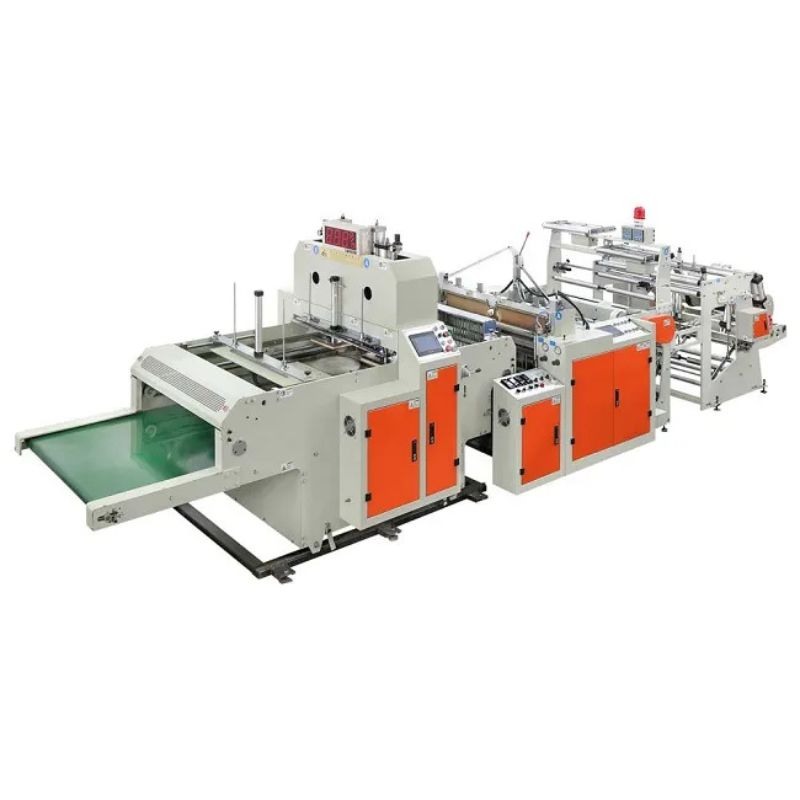
Plastic T-Shirt Bag Making Machine — HDPE & LDPE Shopping Bag Production Line
Fully automatic, dual-line vest bag making machine. Produces 200–400 supermarket shopping bags per minute with precision servo motor feeding, PLC touch-screen control, and hot-seal + hot-cut technology.
CE & ISO 9001 Certified
1-Year Full Warranty
On-site Installation Support
Biodegradable Film Compatible
OEM & Custom Orders Welcome
FOB / CIF Shipping Worldwide
Production Process
How a T-Shirt Bag Making Machine Works
From raw plastic film roll to finished supermarket shopping bag — six automated stages, zero manual intervention.
Step 01
Film Unwinding
HDPE / LDPE roll loaded onto automatic unwinder with tension control
Step 02
Servo Feeding
Dual servo motors ensure precise, constant-tension film advance
Step 03
Heat Sealing
Precision hot-seal knife fuses the bottom seam at controlled temperature
Step 04
Hot Cutting
Integrated hot-cut blade severs bags cleanly with no edge fraying
Step 05
Handle Punching
Crescent-punch unit cuts the characteristic T-shirt loop handles
Step 06
Stack & Collect
Finished bags auto-stacked and counted for downstream packaging
💡 Buyer Insight
The combination of a shared hot-seal + hot-cut knife (rather than separate stations) is what enables high-speed dual-line output at 200–400 pcs/min. Single-station designs cap out around 80–120 pcs/min. When comparing machines, always ask whether seal and cut share one stroke cycle.
Technical Data
Machine Specifications
Standard model parameters. Custom widths, speeds, and control options available on request.
⚙️ Mechanical Parameters
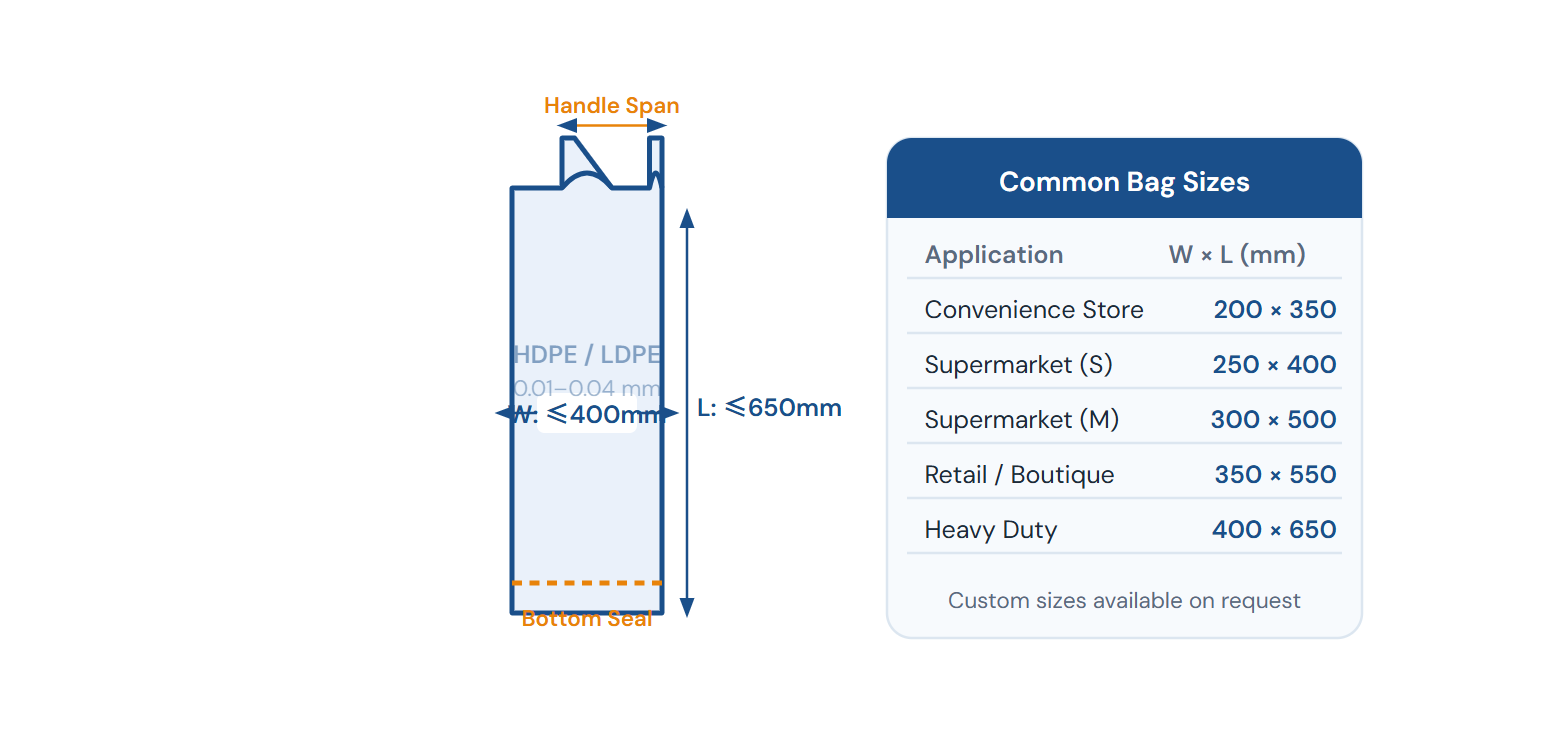
| Max Bag Width | 400 mm × 2 lines |
| Max Bag Length | 650 mm |
| Film Thickness | 0.01 – 0.04 mm |
| Production Speed | 200–400 pcs/min (×2) |
| Sealing Type | Bottom seal (hot-seal + hot-cut) |
| Machine Dimensions | 5,400 × 1,850 × 1,550 mm |
| Machine Weight | ~2,700 kg |
🔌 Electrical & Control
| Control System | PLC + 10" Touch Screen HMI |
| Drive System | Dual Servo Motor (2 kW × 2) |
| Photocell Sensors | 2 pcs (one per line, for print registration) |
| Power Supply | 380V / 50Hz / 3-phase |
| Total Power | ~15 kW |
| Air Compressor | 6 HP (not included) |
| Certifications | CE, ISO 9001 |
Bag Dimension Reference
T-Shirt / Vest Bag Anatomy & Typical Sizes
Engineering Advantages
Why This Machine Outperforms Standard Models
Six differentiating engineering features that reduce downtime, cut scrap, and lower your per-bag production cost.
Dual Servo Motor Drive
Independent servo motors on each production line provide consistent film tension, eliminating slippage and bag-length variation. Reduces reject rate to under 0.3% in steady-state operation.
PLC + Touchscreen HMI
All production parameters — bag length, sealing temperature, speed, and count — are set digitally on a 10-inch touchscreen. No manual dials. Recipe storage allows one-touch changeover between bag sizes.
Photocell Print Registration
Two independent photocell sensors (one per line) track registration marks on pre-printed film, synchronizing the cut position to within ±1 mm. Essential for producing branded supermarket bags at speed.
Integrated Hot-Seal + Hot-Cut
Sealing and cutting happen in a single downstroke, unlike two-step designs that run seal and cut as separate operations. This halves the cycle time per bag and is the key enabler of 400 pcs/min output.
Biodegradable Film Ready
Factory-calibrated sealing temperature profiles for HDPE, LDPE, and compostable/biodegradable films (PLA blends, PBAT). No hardware modifications required — switch materials with a recipe change only.
Auto Bag Counter & Alarm
Built-in digital counter tallies production per shift. Configurable alarms trigger at preset counts (e.g., per bundle), enabling automatic stacking workflows without operator monitoring.
Compatible Raw Materials
Film Material Guide
Understanding your film choice determines bag strength, production speed, and compliance with local sustainability mandates.
HDPE
High-Density Polyethylene
Most common for supermarket T-shirt bags. High stiffness, good load-bearing, low cost. Typical thickness: 0.012–0.020 mm.
LDPE
Low-Density Polyethylene
Softer, more transparent bags. Preferred for boutique retail. Higher tear resistance than HDPE at same thickness. 0.020–0.040 mm typical.
BIO
Biodegradable / Compostable
PLA, PBAT, or starch-blend films. Meets EN 13432 / ASTM D6400. Growing demand in EU and California-regulated markets.
RLDPE
Recycled LDPE / HDPE
Post-consumer or post-industrial recycled resin blends. Requires slightly higher sealing temperature. Supports circular economy mandates.
🌱 Regulatory Trend to Watch
The EU Single-Use Plastics Directive and similar legislation in 60+ countries are accelerating demand for biodegradable T-shirt bags. Buyers investing in a bag making machine today should confirm biodegradable film compatibility to future-proof their production line.
Competitive Analysis
How to Compare T-Shirt Bag Machine Specifications
Not all machines marketed as "high-speed" are equal. Here is what separates production-grade equipment from entry-level alternatives.
Feature Production-Grade
(This Machine) Mid-Range Entry-Level
(This Machine) Mid-Range Entry-Level
Production Lines Dual (×2) Dual Single
Speed (bags/min per line) 200–400 120–200 60–120
Control System PLC + Touchscreen PLC + Buttons Manual / Timer
Drive System Dual Servo Motor Servo (1 motor) Step Motor
Print Registration (Photocell) ✓ (2 sensors) ✓ (1 sensor) ✗
Biodegradable Film Support ✓ Standard Optional ✗
Sealing & Cutting Integrated (1 stroke) Integrated Separate stations
CE Certification ✓ ✓ Often absent
💡 Total Cost of Ownership Perspective
A dual-line machine at 400 pcs/min produces roughly 24,000 bags/hour. An entry-level single-line machine at 100 pcs/min produces 6,000/hour. At identical film cost, you need 4 entry-level machines to match one production-grade unit — with 4× the labor, floor space, and maintenance burden. ROI typically favors the higher-spec machine within 18–24 months.
End-Use Markets
Who Uses T-Shirt Bag Making Machines?
From standalone bag manufacturers to vertically integrated retail chains — this equipment serves six major market segments.
Supermarkets & Grocery Chains
Largest single volume buyer. Requires consistent dimensions, HDPE material, and optional logo printing registration for branded checkout bags.
Plastic Bag Manufacturers
Third-party converters supplying retailers. Typically run multiple machines 24/7. High output reliability and low film waste are top priorities.
Wet Markets & Food Retail
High daily bag volumes in Asia and emerging markets. Often require heavier gauge film (0.025–0.04 mm) for food contact. Unprinted bags typical.
Eco-Packaging Manufacturers
Growing segment producing compostable T-shirt bags from biodegradable film for markets with plastic bag restrictions (EU, California, etc.).
Export-Oriented Bag Factories
Facilities supplying private-label bags to European, North American, or Middle Eastern retailers. CE certification on the machine simplifies customs clearance.
Vertically Integrated Retailers
Chains that blow their own film and convert in-house to control bag cost. The machine integrates directly downstream of HDPE film blowing lines.
Frequently Asked Questions
Buyer FAQ — Plastic T-Shirt Bag Making Machine
Answers to the questions procurement managers and factory owners ask most before purchasing.
What materials can this T-shirt bag making machine process? +
The machine is compatible with HDPE (High-Density Polyethylene), LDPE (Low-Density Polyethylene), LLDPE, and biodegradable/compostable films including PLA and PBAT blends. Film thickness range is 0.01–0.04 mm. Recycled resin films (rHDPE, rLDPE) can also be processed with adjusted sealing temperature settings.
How fast can the machine produce bags, and what affects the speed? +
The dual-line machine produces 200–400 pieces per minute per line, totalling up to 800 bags/minute combined. Actual throughput depends on bag length (longer bags = slower cycle), film thickness, and whether the machine is running printed or non-printed film. Non-printed, smaller bags (≤350mm) typically run at the higher end of the speed range.
What is the difference between a T-shirt bag, vest bag, and shopping bag machine? +
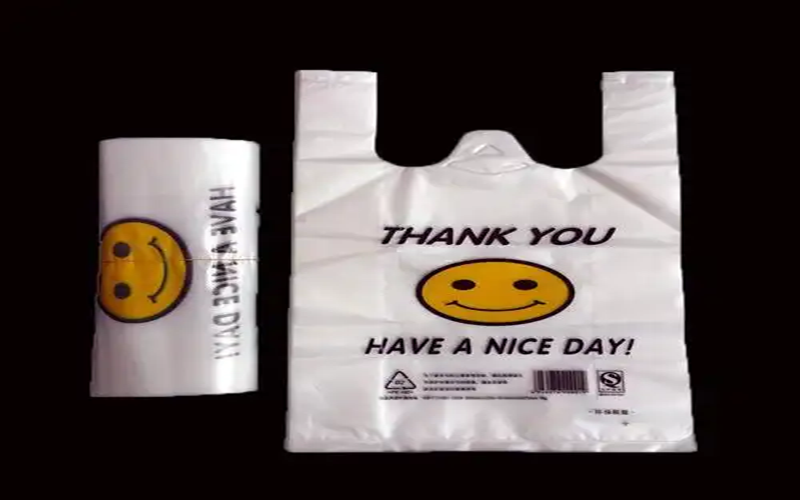
These terms describe the same machine and bag type. "T-shirt bag" is the international trade term; "vest bag" is common in South and Southeast Asia; "shopping bag" or "carrier bag" is used in European markets. They all refer to a bottom-sealed polyethylene bag with two crescent-cut loop handles at the top.
Can the machine handle pre-printed film and maintain accurate print registration? +
Yes. Each production line is equipped with an independent photocell sensor that detects the registration mark on pre-printed film and synchronizes the cutting position accordingly. Cut-to-print accuracy is within ±1 mm in steady-state. This makes it suitable for producing branded supermarket bags, pharmacy bags, and retail chain carrier bags.
What certifications does the machine carry, and why does it matter? +
The machine carries CE marking (mandatory for the European Economic Area) and ISO 9001 quality management certification. CE marking is critical for buyers importing into Europe, as uncertified machinery can be stopped at customs. ISO 9001 provides assurance that the manufacturing process meets internationally recognized quality standards — useful evidence for buyer due-diligence audits.
What after-sales support and warranty is provided? +
The standard warranty is 12 months covering mechanical and electrical defects (excluding consumables and damage caused by operator error). On-site installation and commissioning training is available. A set of critical spare parts (seal knife, photocell, fuses) is included with every machine shipment. Remote technical support is available via video call within 24 hours.
What power supply does the machine require? +
Standard specification is 380V / 50Hz / 3-phase with a total connected power of approximately 15 kW. Buyers in regions using 60Hz supply (Americas, Japan) or different voltage standards should specify this at the time of order — the electrical panel can be adapted accordingly. A separate 6 HP air compressor is required for the pneumatic punch unit and is not included.
Related Searches