
Fully-automatic fruit bag machine
High-volume mass production
Large-scale fruit bag factories
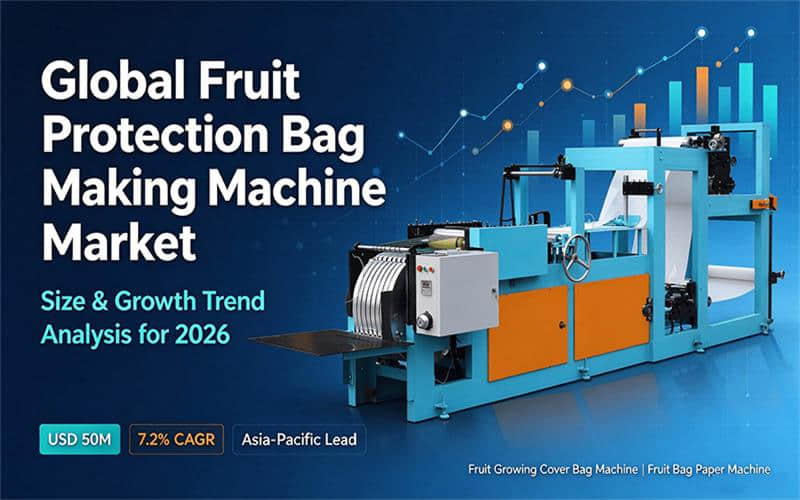
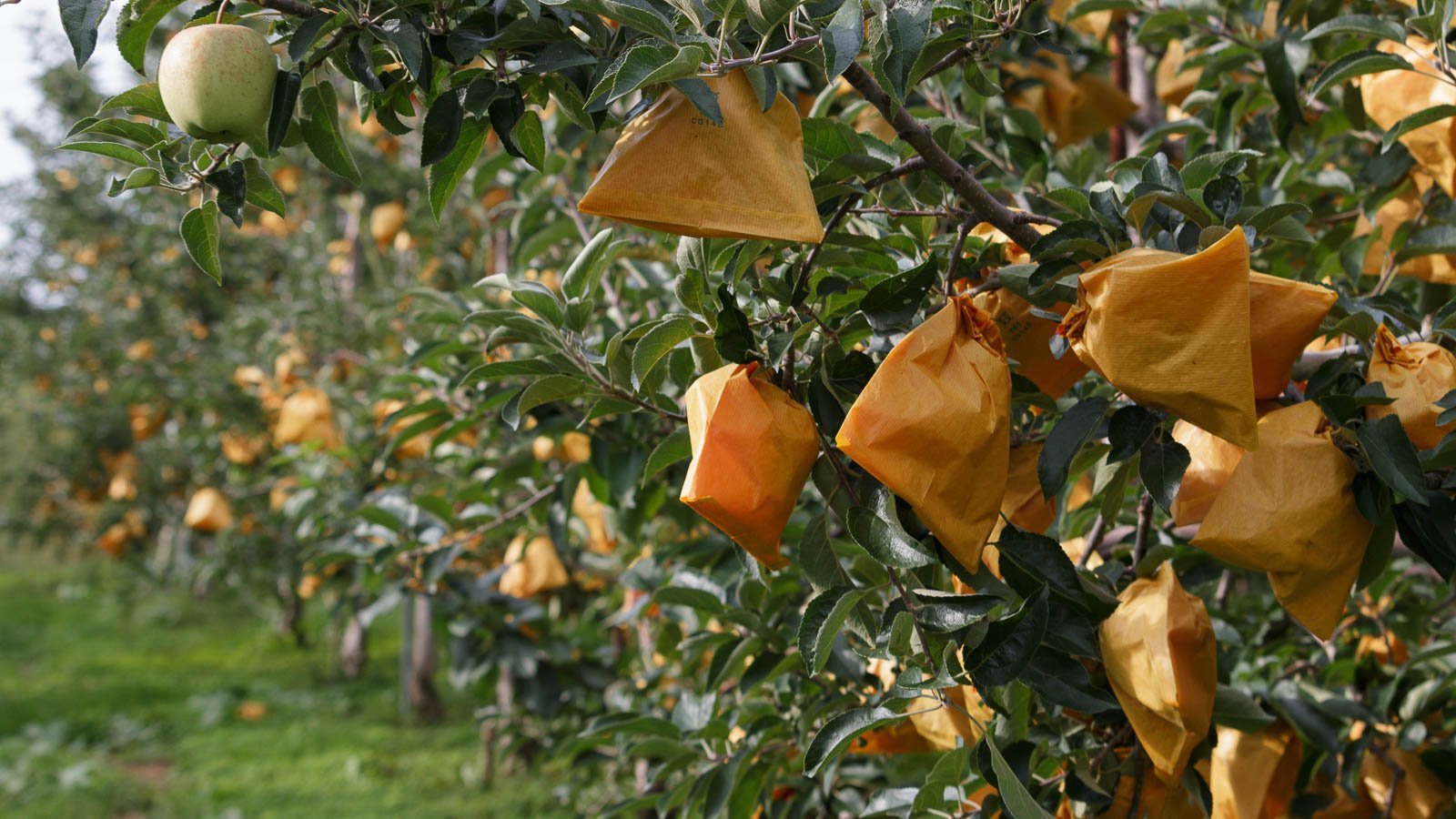
Specialized machinery producing paper & non-woven fruit growing cover bags for apples, mangoes, pears, peaches, grapes and citrus. As export standards tighten and labor costs climb, global demand keeps expanding through 2026 and beyond.
Snapshot: Which machine category and which regional market hold the biggest business potential in 2026? Scroll to find the data-driven answer.
Fruit bagging cuts pesticide use, prevents sunburn and insect damage, improves fruit color and lifts export value for commercial orchards worldwide. The machines that produce these bags fall into three capability tiers.
High-volume mass production
Large-scale fruit bag factories
Medium output, lower investment
Small & medium bag manufacturers
Low-volume local production
Budget-limited local workshops
Scope note: This market research only counts machinery for manufacturing orchard fruit growing sleeves. General food-packaging bag machines are excluded from the statistics.
The global fruit protection bag making machine market is estimated to reach USD 50 million in 2026, expanding at a compound annual growth rate of roughly 7.2% from 2025 to 2035. Expansion is driven mainly by surging demand for fruit cover bags across Asia-Pacific tropical and temperate fruit-planting regions.
Growing exports of premium, low-pesticide fruit raise demand for protective cover bags.
Labor-cost pressure pushes bag factories from manual to automated production lines.
Climate-driven UV, hail and pest stress expands the addressable orchard base.
Biodegradable paper & non-woven bags open new machine segments.
Values compound from the USD 50M 2026 anchor at a 7.2% CAGR. Projection derived from the report's stated base year and growth rate.
The core difference of market expansion roots in real-world agricultural and trade changes — these factors decide how fast machines get adopted in different countries.
International buyers in the EU, Japan, South Korea and the Middle East require low-pesticide, residue-free fruit. Bagging is a practical physical-protection route to meet organic and GAP certification standards.
Mango, apple and citrus exporters from India, Vietnam, Thailand and China expand local bag-making capacity instead of importing finished bags — directly lifting machine purchase orders.
Manual fruit-paper-bag production consumes massive manpower. Many bag manufacturers upgrade to automatic lines to cut labor expense and stabilize daily output.
High-speed cover-bag machines produce tens of thousands of fruit bags per hour, greatly shortening whole production cycles.
Extreme weather — intense UV radiation, hail storms and frequent pest outbreaks — pushes more fruit farmers to adopt protective cover bags.
This encourages bag factories across Latin America, Southeast Asia and East Asia to expand capacity and invest in new fruit-bag paper machines.
Global plastic-restriction policies push biodegradable paper and non-woven fruit bags to replace traditional plastic sleeves.
Suppliers launch upgraded machines compatible with compostable paper and plant-based non-woven materials — opening brand-new market segments.
Asia-Pacific dominates today's volume; Latin America carries the fastest growth for fruit-bag machinery suppliers.
| Comparison | Asia-Pacific | Latin America | Europe & North America | Middle East & Africa |
|---|---|---|---|---|
| Market position | Largest share (>65%) | Fastest-growing region | Relatively small scale | Steady incremental growth |
| Key countries | China, India, Thailand, Vietnam, South Korea | Mexico, Brazil, Peru, Chile | EU countries, USA, Canada | Citrus-planting commercial nations |
| Machine preference | Full-auto & semi-auto units | Semi-auto & compact machines | Energy-saving, eco-material-adapted | Mostly import finished bags for now |
| Key end-use | Apple, pear, mango, citrus plantation | Citrus, avocado plantations | High-value premium specialty fruits | Expanding commercial citrus orchards |
Capability quick note: Asia-Pacific dominates current market volume; Latin America delivers the highest future growth potential for fruit-bag machinery suppliers.
People often mix up application scenarios and market risks when evaluating this industry. Here is the clearer picture.
Asia-Pacific holds dominant share, yet local competition is intense. Low-end budget machines trigger price wars and squeeze profit for premium equipment vendors.
Fully-automatic lines need heavy initial capital. Tiny, low-income agricultural workshops cannot afford the expenditure — semi-automatic and manual equipment still hold solid market space.
Paper-pulp and non-woven fabric price volatility squeezes bag-factory margins. Even with rising consumption, manufacturers may delay new-machine procurement when raw-material costs spike.
Operation and maintenance need professional technicians. Many overseas buyers struggle without fast spare-parts supply and on-site installation support — after-sales service is as critical as performance.
The fruit protection bag making machine market keeps steady growth up to 2034. The strongest demand continues from Southeast Asia and Latin America tropical-fruit export sectors.
Machines evolve toward energy saving, higher speed and multi-material compatibility.
Tropical-fruit exporters in Southeast Asia & Latin America drive steady market expansion.
Automatic defect detection becomes standard on premium production lines.
Investor & producer tips: prioritize suppliers with proven overseas installation records, flexible customization capacity and reliable spare-parts supply. As organic fruit trade grows globally, demand for fruit growing cover bag machines should stay stable for at least the next decade.
A fruit protection bag making machine is specialized agricultural equipment that automatically manufactures paper or non-woven fruit growing bags for apple, mango, pear, peach and citrus orchards. It completes paper feeding, folding, sealing, punching and cutting within one integrated production line.
Asia-Pacific holds the largest market share, with China, India, Thailand and Vietnam as top buyers. Latin America is the fastest-growing regional market.
Machines support single-layer paper fruit bags, double-layer waterproof fruit bags, non-woven biodegradable bags and custom-printed bags for mango, apple, grape and other fruit varieties.
2026 marks a pivotal growth year for the global fruit protection bag making machine market. Driven by premium fruit export requirements, sustainable farming transitions and rising global labor costs, the industry maintains robust growth momentum.
Persistent challenges remain — high initial machinery investment, raw-material price swings, technical after-sales barriers and low-end product competition. Nevertheless, emerging markets in Southeast Asia and Latin America unlock substantial long-term opportunities for machine manufacturers, distributors and bag-plant investors.
Looking for specifications or a customized quotation for your orchard scale and output target? Our engineering team provides professional solution evaluation.
Fully-automatic · semi-automatic · manual lines